Planted Potential: How Verdant Minds is growing skills, confidence, and community
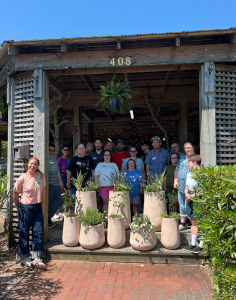
Planted Potential brings together individuals, organizations and community partners to create and maintain vibrant streetscapes in downtown Manteo while providing meaningful vocational experiences for participants. Photo courtesy of Tanya Lamo.
By Danielle Puleo
In downtown Manteo, colorful planters are growing something far more meaningful than flowers. They are helping individuals with intellectual and developmental disabilities build skills, confidence, and a greater sense of connection to the community around them.
That is the vision behind Planted Potential, a workforce development project created by local nonprofit Verdant Minds and supported through an Impact Grant from the Outer Banks Community Foundation.
“We are excited to support Verdant Minds as they get The Planted Potential project up and running,” said Outer Banks Community Foundation Board Director Natalie Mead. “It’s an excellent opportunity to include members of our community in work that is uplifting and visible to the public. We are looking forward to seeing the work take shape and for the participants to learn very useful skills while having some fun.”
Founded by horticulturist and educator Tanya Lamo, Verdant Minds creates workforce development opportunities for individuals with intellectual and developmental disabilities, with a focus on horticulture, customer service, hospitality, and life skills.
The Planted Potential project began after Lamo recognized an opportunity to address two needs at once: Manteo was looking for ways to beautify and maintain its public streetscapes, while individuals in the developmental disability community needed meaningful opportunities to develop vocational skills and become more engaged with those around them.
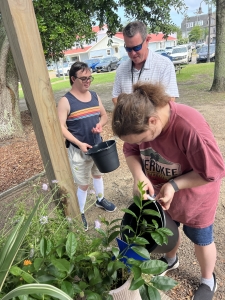
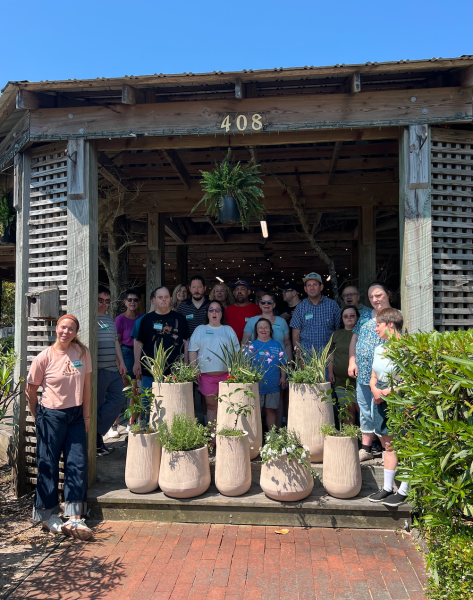
Planted Potential brings together individuals, organizations and community partners to create and maintain vibrant streetscapes in downtown Manteo while providing meaningful vocational experiences for participants. Photo courtesy of Tanya Lamo.
The program brings approximately 25 participants together for group activities, generally meeting once a month. Each visit builds upon the last, beginning with education about how to create and assemble planters, followed by planting, and then care and maintenance.
“Every level was education and implementation,” said Amy Underwood, Lamo’s business partner at Bough & Vine in downtown Manteo and a collaborator on this project. “They were out in the community, enjoying the town, and able to see the great work they did.”
Perhaps most importantly, participants began to take ownership of that work.
For Lamo, that pride is an important part of workforce development. The project’s apprenticeship component gives one participant the opportunity to take responsibility for maintaining the planters on a regular schedule, with guidance from a supervisor.
The work requires checking plants, monitoring watering, trimming and maintaining the planters and being accountable for their condition.
“I think that building responsibility and having some structure with the schedule leads to life skill building,” said Lamo.
Those skills can also translate into future employment.
“Just having the skillset to be able to say, ‘I could probably apply for a job at Lowe’s or a garden center because I have these skills now,’” Lamo said. “To have the confidence that you’ve worked with plants, and now have some knowledge about them—that’s the goal.”
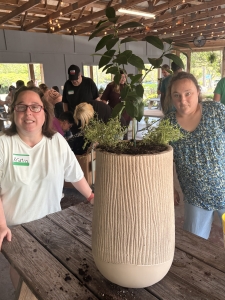
Participants in Verdant Minds’ Planted Potential project bring their horticultural skills into the community, while discovering new ways to contribute, connect and grow. Photo courtesy of Tanya Lamo.
Because the work happens in public spaces, participants are also developing communication and customer-service skills. They interact with residents and visitors and have the opportunity to talk about the plants they helped select, plant, and maintain.
“I think for our participants to be able to speak about the plants that they planted and things that they are taking care of is another skill that’s really important,” added Lamo.
The project has also created opportunities for collaboration throughout the community.
Participants worked with the College of The Albemarle to create pottery pieces used as pollinator ponds and decorations in the planters.
The impact has extended beyond the original project, too. Underwood said other community members began noticing planters that needed attention, including those near the marina and along the boardwalk, and stepped in to help.
“Other individuals in the community picked up on the needs that were there, and so it grew,” said Underwood. “And you always want to see a project grow and positively impact other people and give vision to others as well.”
For Lamo, that ripple effect is exactly what makes the project meaningful. “Finding value in the community in which we live is so important,” she said.
The project has also given a new nonprofit an opportunity to establish itself and demonstrate what it can offer the Outer Banks.
“We were a new nonprofit this year, so for an organization like the Outer Banks Community Foundation to entrust funds to us to run a project that we had a vision and passion for was just really heartfelt,” said Lamo.
The Impact Grant primarily covered project supplies and allowed Verdant Minds to put its vision into action. “It allowed us to get a project under our belt and to gauge that and begin telling our story about the work that we have the potential to do in this community,” added Lamo.
The benefits reach well beyond the participants. The planters add color and life to downtown Manteo, participants become more visible and engaged members of the community, and local organizations have found new opportunities to work together.
For Underwood, watching those connections develop has been one of the most rewarding parts of the project. “It’s been beautiful to see how well the Outer Banks community comes around,” she said. “It was a privilege to be able to join in on that.”
Planted Potential is, at its heart, about much more than plants. It is about creating opportunities for individuals to discover what they can do, take pride in their contributions and see themselves as an important part of the community.
And with each planter that takes root, so does a little more potential—for the participants, for Verdant Minds and for the community they are helping grow.
The Outer Banks Community Foundation’s next grant application deadline is Friday, October 30 for Impact Grants, which are open to all types of projects with no restrictions on scope or focus, with funding requests exceeding $10,000. Nonprofits are encouraged to visit the Community Foundation’s website for detailed guidelines, eligibility criteria, and the application portal. Early submissions are encouraged to allow time for review and feedback.
For more information or assistance with the grant application process, visit OBCF.org/grants or contact the staff at 252-423-3003.
About the Outer Banks Community Foundation: The Outer Banks Community Foundation is a 501(c)3 nonprofit organization committed to fostering philanthropy and supporting local causes. Through its charitable funds and grant programs, the Foundation strives to enrich the quality of life for residents of the Outer Banks.